1️⃣: Accident Type
The Deepwater Horizon incident was classified as a well blowout followed by explosions and fire during offshore drilling operations.
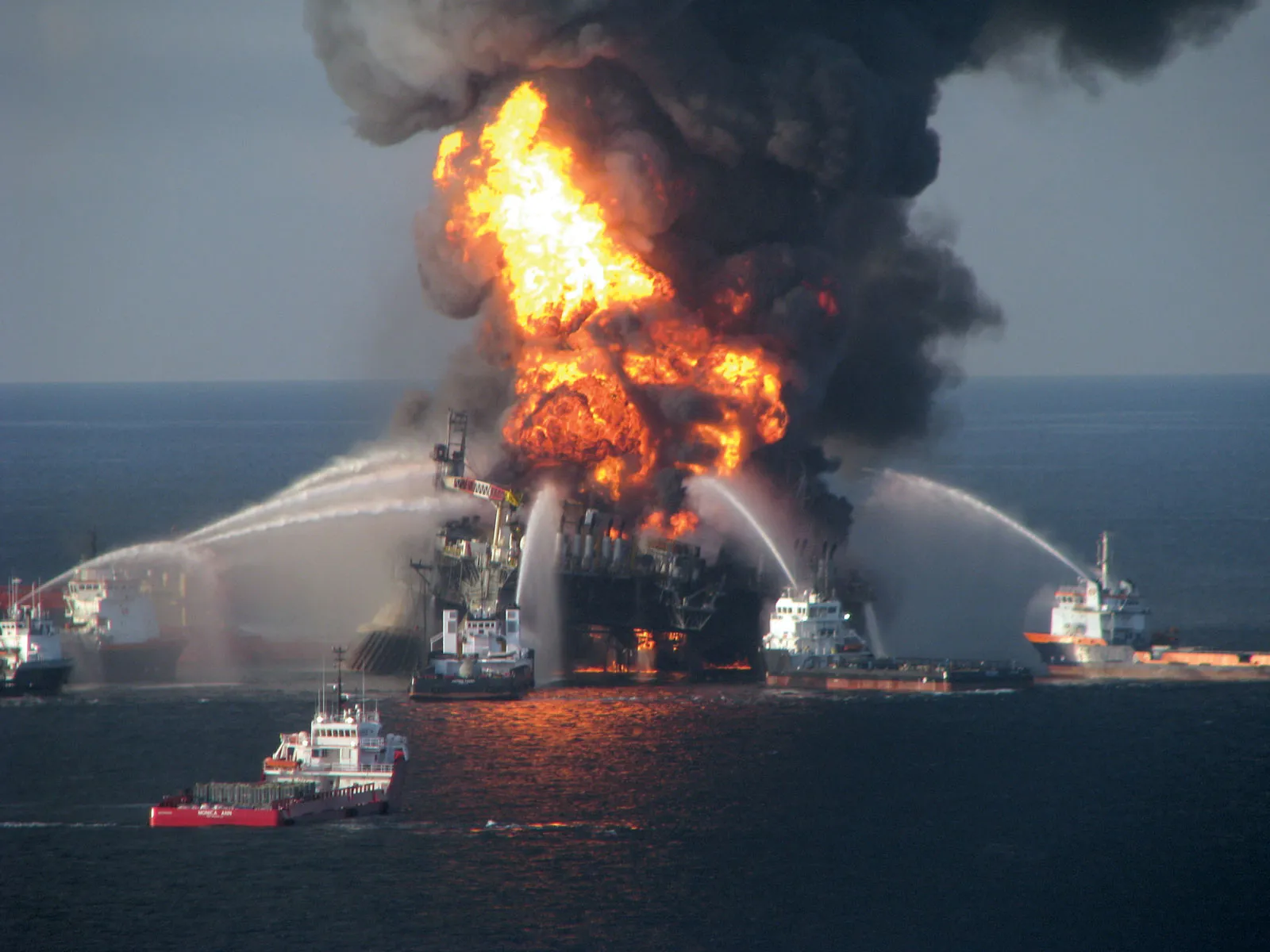
During temporary abandonment activities, high-pressure hydrocarbons escaped from the well due to loss of well control. These hydrocarbons travelled up the drill pipe and ignited on the rig, leading to:
A massive explosion
An uncontrollable fire lasting nearly two days.
The eventual sinking of the drilling rig.
This type of accident highlights the extreme risks associated with offshore drilling when barriers fail and safety systems do not function as designed.
2️⃣: Production Damages
The accident caused severe and long-lasting production losses, including:
Total loss of the Deepwater Horizon rig, valued at hundreds of millions of dollars
Permanent shutdown of the Macondo well until it was fully sealed months later
Suspension of multiple offshore drilling projects in the Gulf of Mexico.
Delays in exploration and production schedules across the region.
Additionally, regulatory authorities imposed a temporary moratorium on deepwater drilling, affecting not only BP but the entire offshore oil and gas industry operating in U.S. waters.
3️⃣ Fatalities
One of the most tragic aspects of the disaster was the loss of human life.
11 offshore workers were killed instantly during the explosion.
Several other workers sustained serious physical and psychological injuries.
Families, colleagues, and communities were permanently affected.
The fatalities exposed major failures in
Emergency preparedness.
Alarm and evacuation systems.
Safety training and competency assurance.
This reinforces the reality that non-compliance in high-risk industries directly translates into loss of life.
4️⃣ Environmental Damages
The Deepwater Horizon spill became one of the largest environmental disasters in history.
Millions of barrels of crude oil were released into the Gulf of Mexico.
Marine ecosystems suffered widespread contamination.
Severe damage occurred to:
Fish populations
Birds and marine mammals
Coastal wetlands and coral reefs
The environmental recovery took years, and some effects are still being studied today. This incident demonstrated how a single failure in industrial safety can cause irreversible environmental harm.
5️⃣ Financial Losses
The financial consequences for BP and its partners were unprecedented:
Cleanup and response operations costing tens of billions of dollars
Legal settlements, penalties, and compensation claims
Increased insurance premiums and operational costs
Significant drop in company share value
The total financial burden made Deepwater Horizon one of the most expensive industrial accidents ever recorded.
6️⃣ Economic Losses
Beyond the company itself, the accident caused widespread economic disruption:
Severe losses to the fishing and seafood industries.
Major decline in tourism along affected coastlines.
Thousands of workers faced unemployment or reduced income.
Regional and national economic setbacks.
Local economies dependent on the Gulf of Mexico suffered deeply, proving that industrial non-compliance impacts entire societies, not just corporations.
7️⃣ Business Reputation Losses:
The reputational damage was global and long-lasting:
BP faced intense public criticism and media scrutiny.
Loss of trust from governments, regulators, and the public.
Long-term damage to brand credibility.
Increased regulatory pressure on BP’s global operations.
The incident became a textbook example of corporate failure in safety governance, frequently cited in safety and management training worldwide.
8️⃣ Root Causes of the Accident.
Investigations concluded that the disaster resulted from systemic failures, including.
Failure of the blowout preventer (BOP) to seal the well.
Poor well design and cementing integrity.
Inadequate risk assessment and hazard identification.
Management decisions driven by cost and schedule pressure.
Weak safety leadership and safety culture.
Insufficient training and competency verification of personnel.
These root causes clearly show that rules existed—but were not properly followed or enforced.
9️⃣ Accident Incident Investigations:
Multiple investigations were conducted by U.S. authorities and independent bodies. Their conclusions highlighted:
Serious non-compliance with offshore drilling regulations.
Ineffective safety management systems.
Poor communication between operators and contractors.
Lack of accountability at multiple organisational levels.
As a result:
Offshore safety regulations were strengthened worldwide
Industry standards were revised
Greater emphasis was placed on training, competency assessment, and compliance auditing.
A Lesson in the Consequences of Non-Compliance for the Global Oil & Gas Industr…
Industry News
Featured
A Lesson in the Consequences of Non-Compliance for the Global Oil & Gas Industry 2010
Global Case Study on Non-Compliance, System Failure, and the Cost of Ignoring Safety Standards.
The Deepwater Horizon disaster of April 2010 remains one of the most catastrophic industrial accidents in the history of the oil and gas sector.
The incident occurred at the Deepwater Horizon, an offshore drilling rig operating in the Gulf of Mexico under the operational responsibility of British Petroleum (BP).